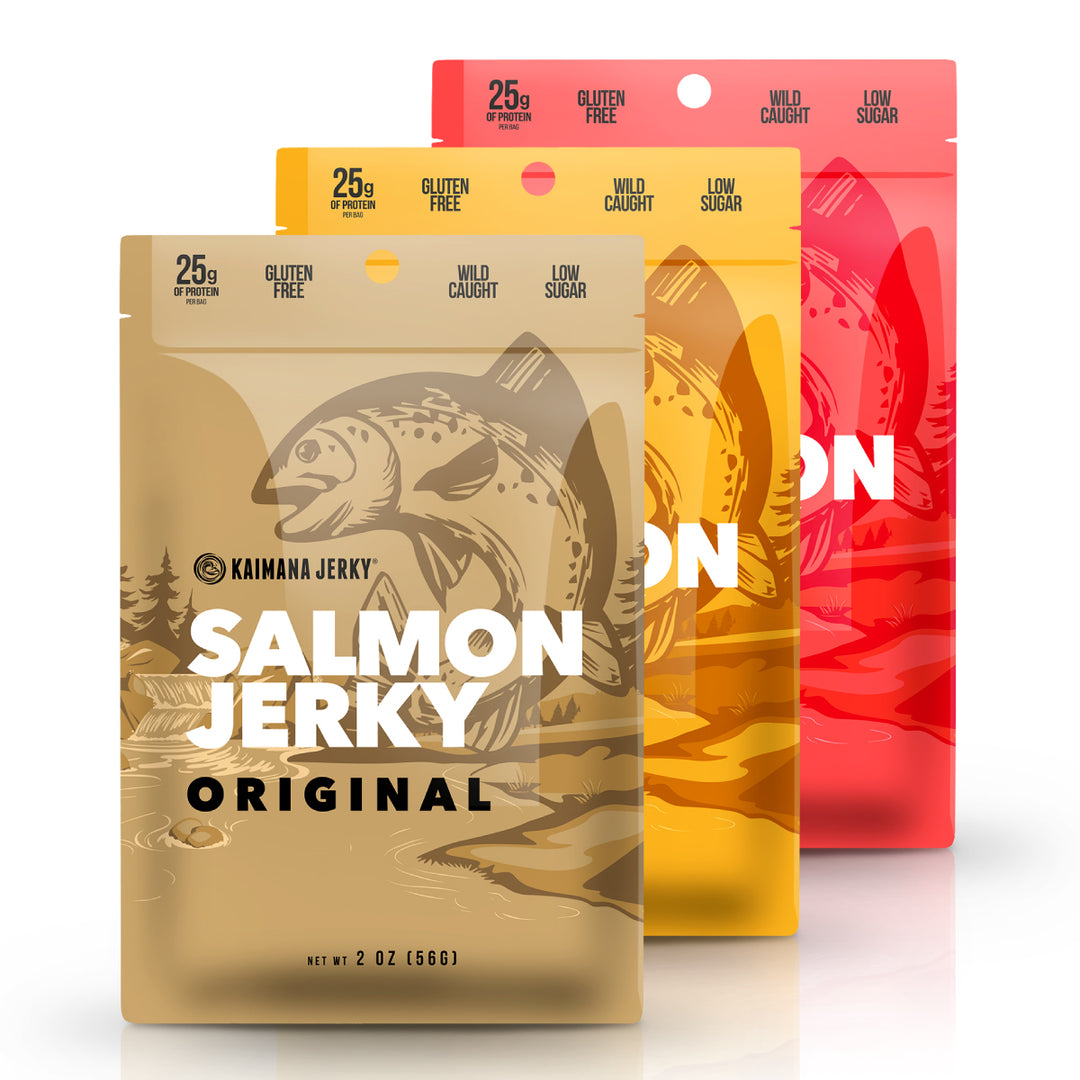
Fresh Catch, Bold Flavor—Fish Jerky Redefined!
Savor the bold taste of wild-caught fish jerky, expertly seasoned and slow-dried for peak flavor. A protein-packed snack for every adventure!






Fish jerky is packed with many nutrients, making it an excellent nutritious snack. In fact, some dieticians call it a superfood because of its rich nutritional content. Wondering whether it's a healthy, guilt-free snack? Let's explore its health benefits:
Fish jerky is an excellent source of lean protein that's essential for building and repairing tissues, supporting muscle growth, and helping the body create antibodies to fight infections.
In fact, fish jerky contains more protein than beef jerky. One ounce(oz) of beef jerky contains 9.4g of protein. In contrast, an ounce of salmon jerky has 13g of protein.
Fish jerky is made from oily fish, which is a good source of omega-3 fatty acids. Omega-3 is beneficial for heart, brain, and eye health. It's also vital for immune function and preventing inflammation throughout the body.
Fish jerky is especially rich in docosahexaenoic acid (DHA) and eicosapentaenoic acid (EPA), two omega-3 fatty acids that are more readily absorbed by the body compared to alpha-linolenic acid (ALA), a plant-based omega-3 fatty acid.
Unlike beef and pork jerky, fish jerky is lower in saturated fats. This makes it healthier than other jerky types because consuming excessive saturated fat can raise harmful LDL cholesterol levels, increasing your risk of obesity, heart disease, and certain types of cancer, according to the World Health Organization (WHO).
And best of all? Fish jerky contains good levels of healthy polyunsaturated fat, which can help to lower bad cholesterol levels and reduce your risk of cardiovascular disease.
Tip: While fish jerky contains little to no saturated fats, some fish jerky producers use coconut oil in their recipes, raising the saturated fat content. If you're concerned about your fat intake, check the nutritional label to ensure the brand you want to purchase doesn't use coconut oil.
Your body needs calcium, magnesium, and phosphorus for good bone health. However, your body requires vitamin D to absorb these minerals effectively. Unfortunately, nearly four out of ten American adults have a vitamin D deficiency — especially those who live in areas that receive little sunlight.
Fish jerky is an excellent source of vitamin D, particularly salmon jerky. An ounce of salmon jerky provides 7% of the DV of vitamin D. In contrast, the same amount of beef jerky contains no vitamin D.
Savor the bold taste of wild-caught fish jerky, expertly seasoned and slow-dried for peak flavor. A protein-packed snack for every adventure!
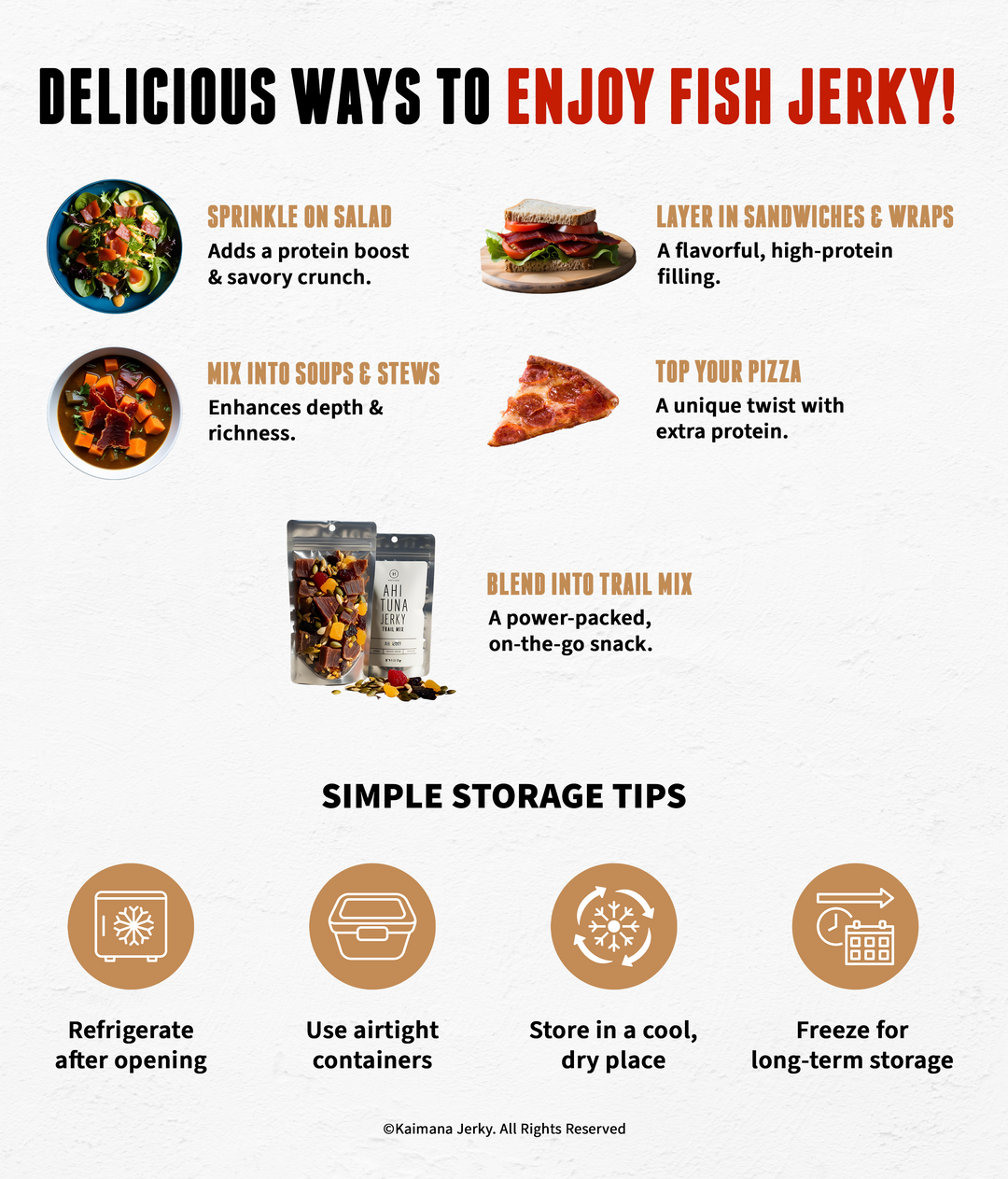
Fish jerky is a tasty treat you can enjoy as a standalone nutritious snack when you need a quick protein boost. However, if you're an adventurous snacker, here are some creative ways on how to add fish jerky to your diet:

Fish jerky is a tasty snack with multiple health benefits. It's rich in protein, low in saturated fat, high in omega-3 fatty acids, and rich in vitamin D, making it an excellent alternative to traditional beef jerky. However, not all fish jerky brands are created equal. Some brands use harmful preservatives and additives that can be harmful to your health.
At Kaimana Jerky, we work closely with the Hawaii Seafood Council to ensure our fish jerky meets the highest industry standards in freshness and quality. Additionally, the FDA inspects our facility yearly to ensure our products are safe for consumption.
Ready to indulge in a delicious treat that's good for your health? Visit our store for various ahi tuna, salmon, and Hawaiian wahoo jerky flavors.
Fish jerky has a chewy texture and fish-forward flavor that's slightly sweet, spicy, or smoky, depending on the fish and seasoning used.
Lean fish like cod, halibut, and redfish are ideal for fish jerky because they dry well and last longer because they have minimal fat. Oily fish like salmon and tuna are also good candidates, but they have a shorter shelf life due to their higher fat levels.
The best flavors of fish jerky depend on preference. If you enjoy spicy snacks, you will enjoy jerky flavors like Peppered Ahi Tuna or Sriracha Ahi Tuna. On the other hand, you might prefer Lemon Salt Ahi Tuna Jerky if you enjoy zesty treats.
Yes, fish jerky is a healthy treat made specifically for human consumption. As one of the best diet snacks, it offers a nutrient-dense, protein-packed option for those looking for the best healthy snack to enjoy on the go.
If you want to feed your dog jerky, look for tailor-made jerky for dogs. Unlike regular jerky, dog-specific jerky is specially formulated for dogs and doesn't contain ingredients harmful to dogs, like garlic or onion.